
Findeva FPK-55 High-frequency Knocker
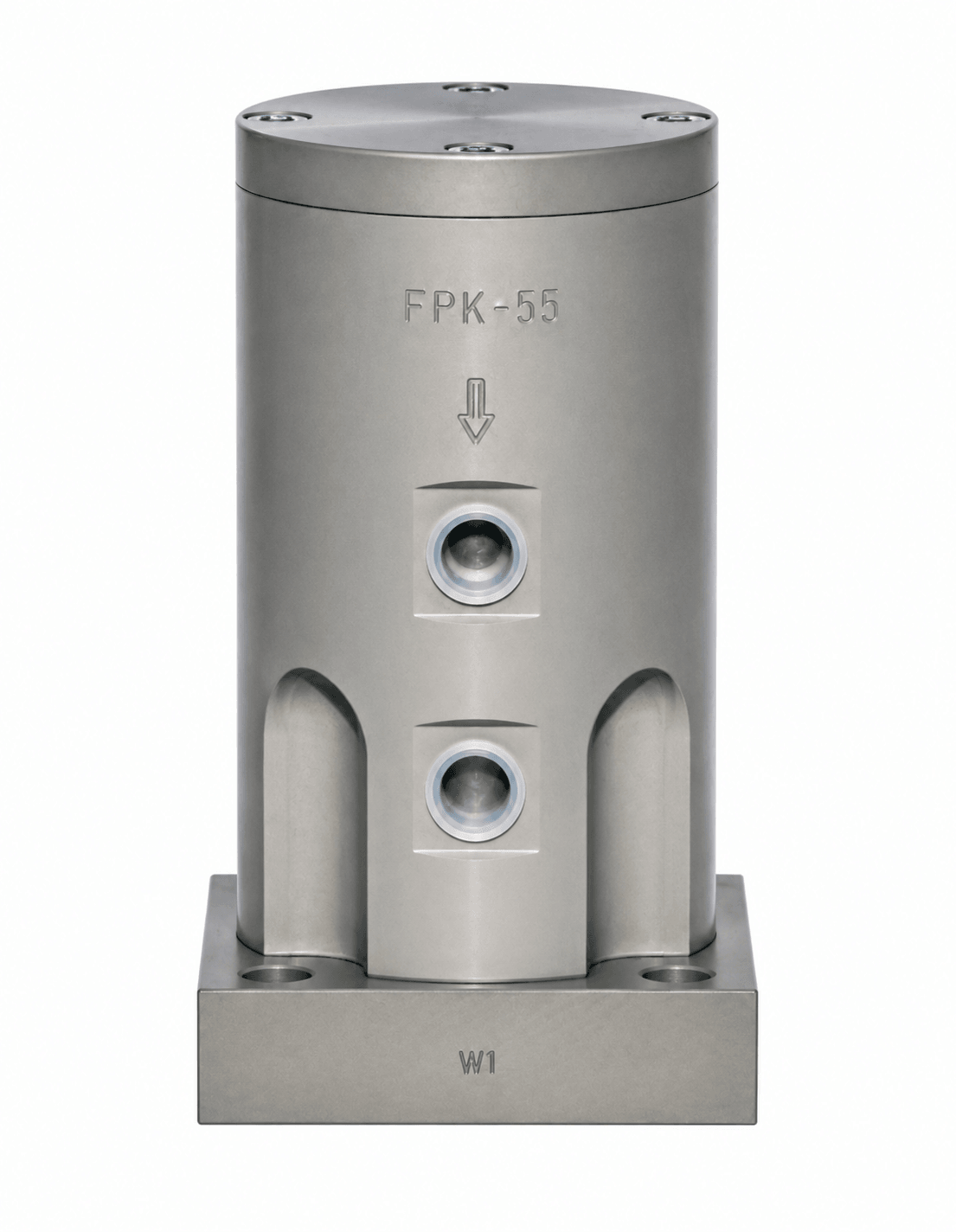
This pneumatic high-frequency knocker Findeva FPK-55 knocks off adhering material by impact, without lubrication.
Availability
Description of the pneumatic high-frequency knocker Findeva FPK-55
This model belongs to Findeva’s FPK range of high-frequency knockers, supplied with two interchangeable baffle plates (soft and hard, the latter pre-mounted).
Particularly suited to knocking off adhering material from the walls of silos, chutes, filters, reactors and pipelines, including in food and pharmaceutical industries.
Dimensions and weight
| Length | 191 mm |
| Diameter | Ø 94 mm |
| Weight | 4.70 kg |
Performance
See the full range : High-frequency Knockers FPK
Downloadable documents
PDF Technical data sheet high-frequency knocker FPK PDF Operating manual FPK-40 and FPK-55Applications of the pneumatic high-frequency knocker FPK-55
This pneumatic high-frequency knocker is particularly suited for:
- Knocking off adhering material on silos, hoppers and chutes
- Cleaning filters, reactors and pipelines
- Food, pharmaceutical and beverage applications
- Dusty or ATEX-classified environments
Construction and operation of the FPK-55
The piston bounces against an air cushion or, with a baffle plate, against one of the two supplied synthetic baffle plates. Additional impact regulation is available through the two plates of differing hardness. The aluminium housing, base plate and cap are all hard Ematal-coated; the piston is made of coated steel. This extra-hard, corrosion-resistant surface results from aluminium oxidation generated by titaniferous electrolysis. Without lubrication, it operates up to 120°C (HT version up to 150°C, LT version down to -40°C on request). It further withstands dusty environments and is available with ATEX certification.