Why high frequency
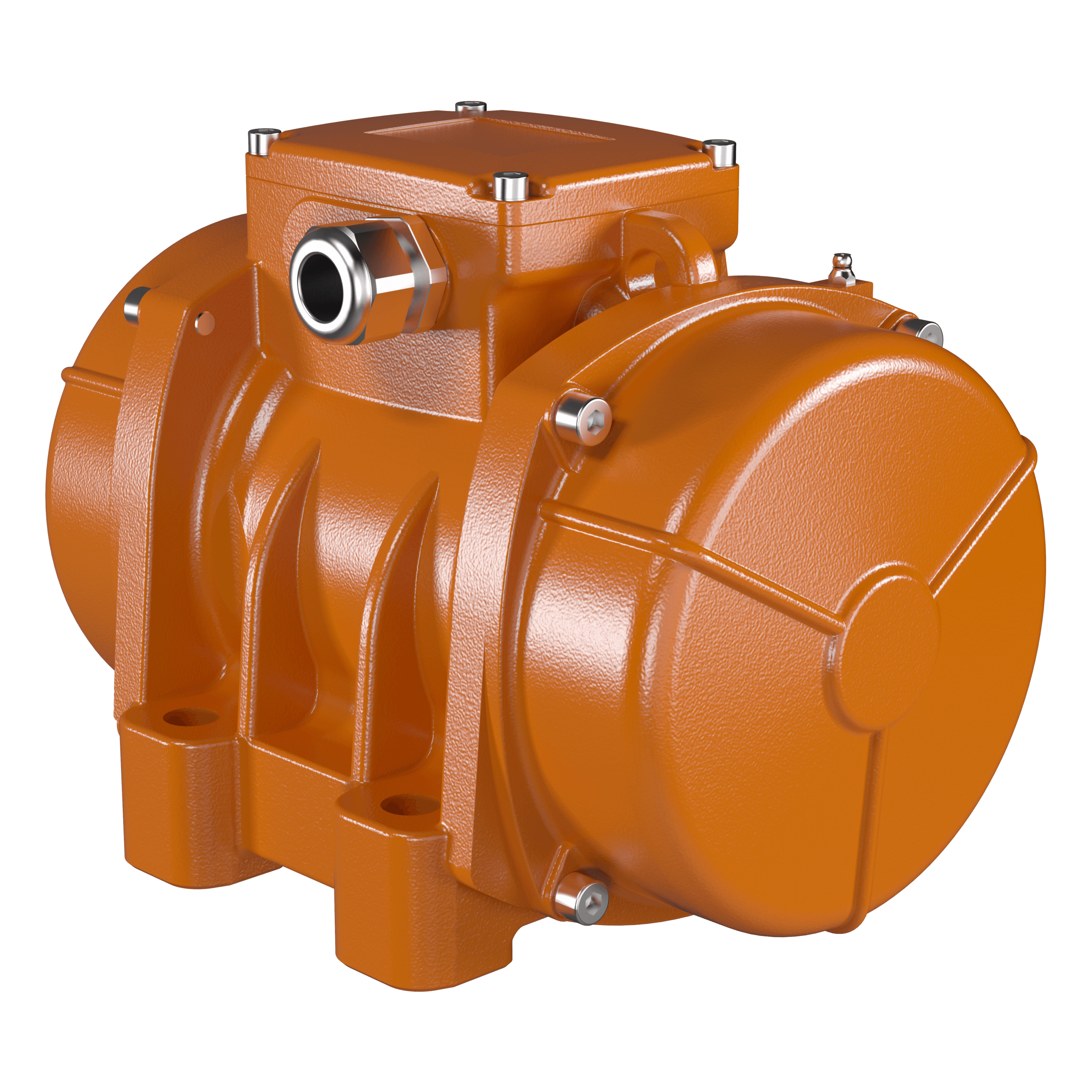
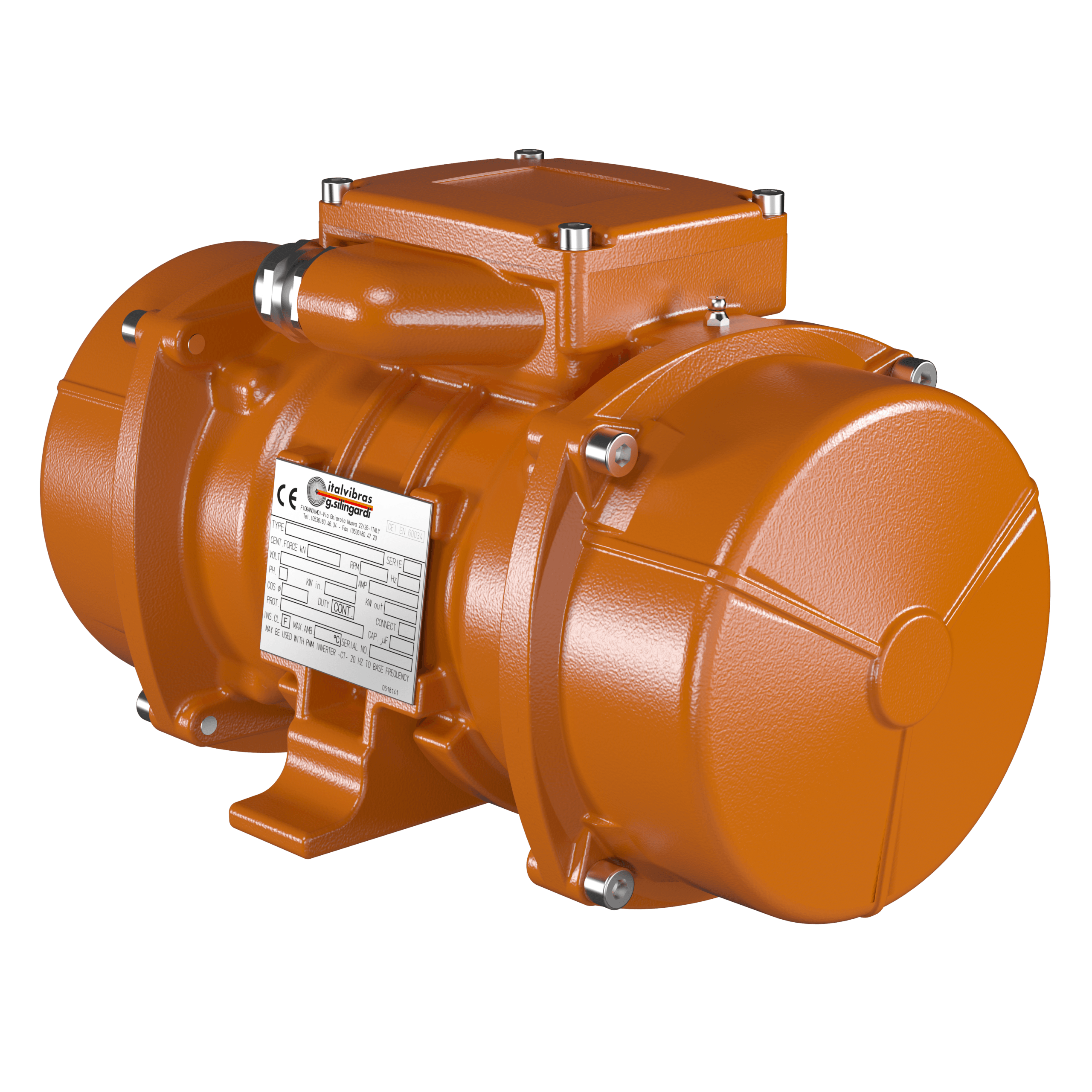
Where a conventional vibrator motor runs between 750 and 3,000 rpm, these machines reach 6,000 to 9,000 vibrations per minute. The motion becomes very short and very fast : many low-amplitude impulses instead of few wide ones.
That is precisely what precast concrete calls for : making the material settle in a mould, driving out trapped air and obtaining an even surface, without displacing the mass or distorting the formwork. You will find them on vibrating tables, moulds, and block and paver machines.
Variable or fixed frequency ?
This is the question that separates the two series, and it is primarily an economic one. The ITV-VR series is continuously adjustable, letting you match the vibration to the product and to the moulding stage — but it requires an electronic inverter or an electromechanical converter.
The ITVAF series runs at fixed frequency, 6,000 or 9,000 vibrations per minute. No inverter, so a simpler and less costly installation. If your process always makes the same product under the same conditions, that is the rational choice.
Two mounting types in both series
Independently of the frequency, each series offers bolt-hole mounting and mounting on a standardised RS2 cradle. The cradle makes removal and replacement easier, which matters on a precast table where vibrators are changed regularly.
A precast concrete project ?
Audimat Automation is an official Italvibras distributor. Tell us the type of machine, the mass to be vibrated and your process constraints : we will help you choose the series, the reference and the mounting type.
Request a quote+32 2 735 38 95