How an unbalance vibrator works
The principle is simple, and that is what makes it reliable. A motor drives eccentric weights fitted at each end of its shaft. As they rotate they create a centrifugal force that sets the machine vibrating.
Two quantities govern the result. Centrifugal force increases with the square of the speed : with the same weights, a motor running half as fast produces four times less force. And amplitude depends on the ratio between the static moment of the weights and the total mass set in motion.
In practice : a fast motor delivers many low-amplitude impulses, a slow motor few but wide ones. Amplitude moves the material, frequency releases it. That is why 2 poles are chosen to de-aerate concrete and 8 poles to convey a fragile product.
Which mounting type to choose
Foot mounting is the default : the vibrator is bolted onto the structure. It offers the widest choice — 12 families, from standard to stainless steel, from ATEX to direct current.
Flange mounting answers a geometry, not a power requirement : it allows the vibrator to be fitted at the centre of a circular screen, where feet would have no bearing surface.
High frequency is a world of its own : 6,000 to 9,000 vibrations per minute, to make concrete settle in a mould and drive out trapped air, without displacing the mass.
Mechanical vibrators, finally, are not vibrator motors : they are exciters without a built-in motor, driven by an external one. This is the solution used by builders of large vibrating machinery.
The questions that really decide
- Is your installation in a classified area ? The zone classification — gas, dust or both — rules out most families on its own.
- Does the environment dictate a material ? Intensive washdown, food and pharmaceutical applications call for AISI 304 stainless steel.
- What power supply do you have ? On a machine with no mains supply, only the direct current series will do.
- What mass must be set in motion ? It determines the force, and therefore the size. A useful rule of thumb for a hopper : one tenth to one twentieth of the product weight.
One last reminder that saves a lot of disappointment : never vibrate a closed hopper.
Audimat, official Italvibras distributor
We distribute the complete Italvibras range and ship worldwide. Describe your application, the mass to be set in motion and your zone classification : we will point you to the right family and reference.
Request a quote+32 2 735 38 95
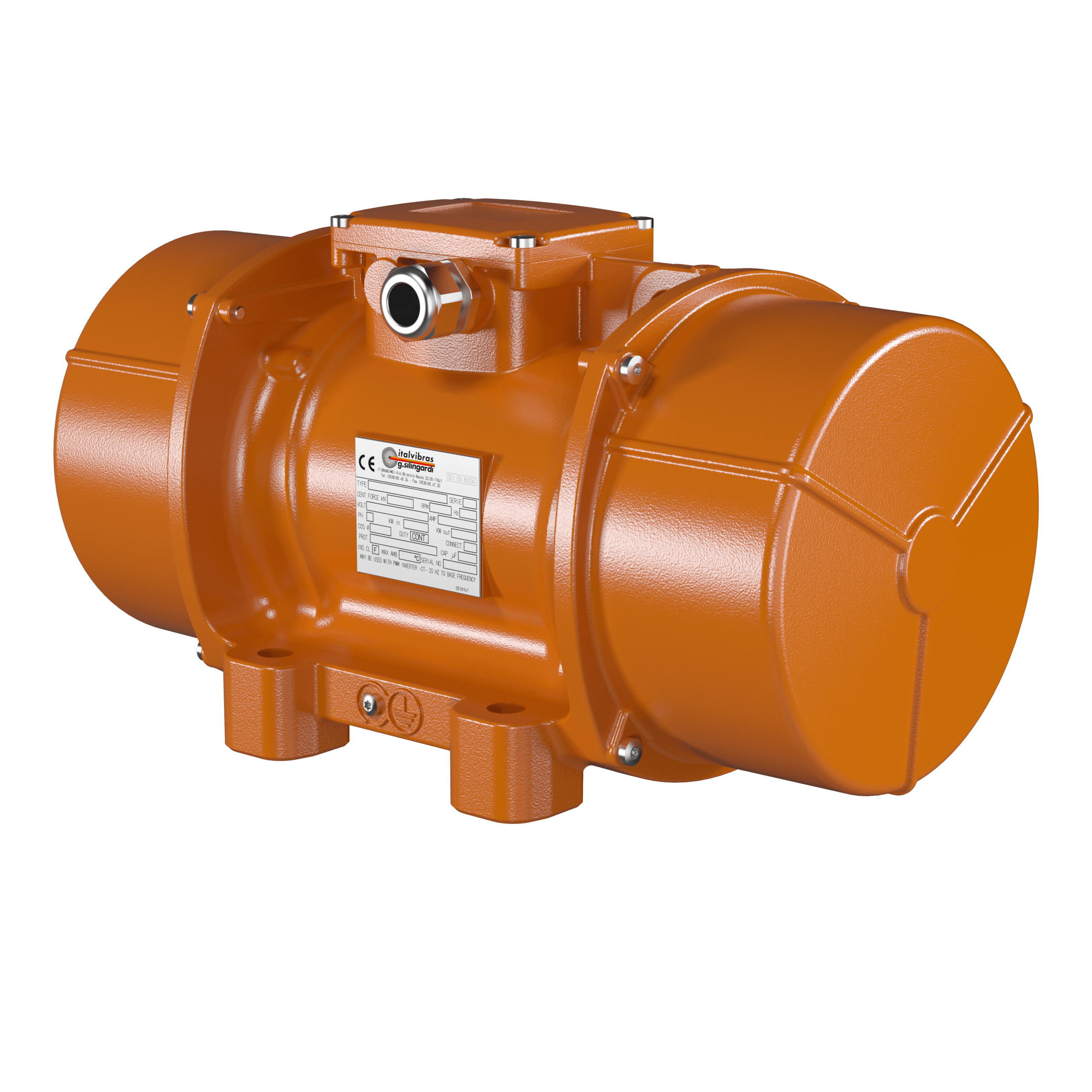 Foot mountedThe most common mounting : the vibrator is bolted directly onto the structure12 families — 301 references — 0.25 to 220 kNView the families →
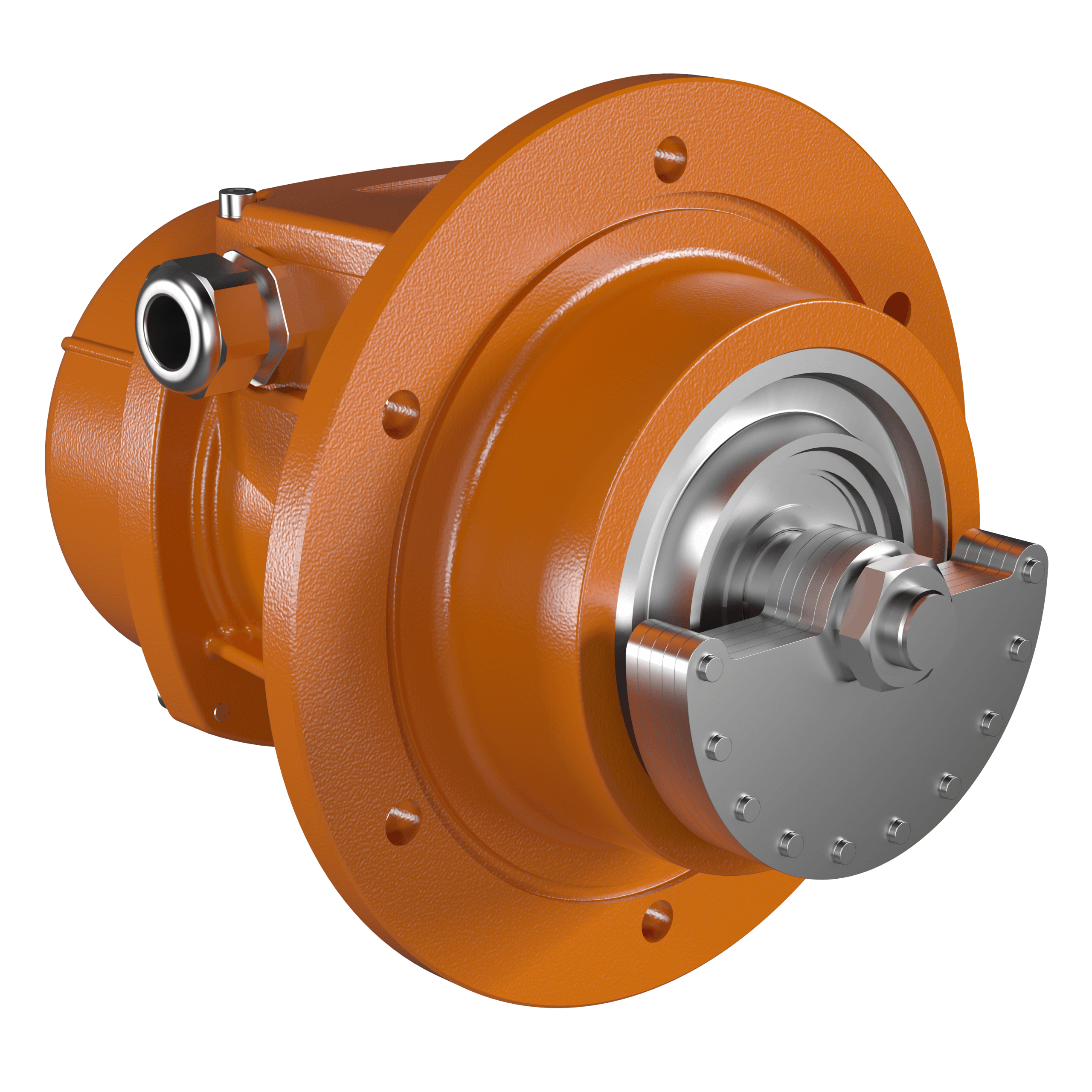 Flange mountedMounted through a circular flange, for circular screens and sieves8 families — 48 references — up to 68.7 kNView the families →
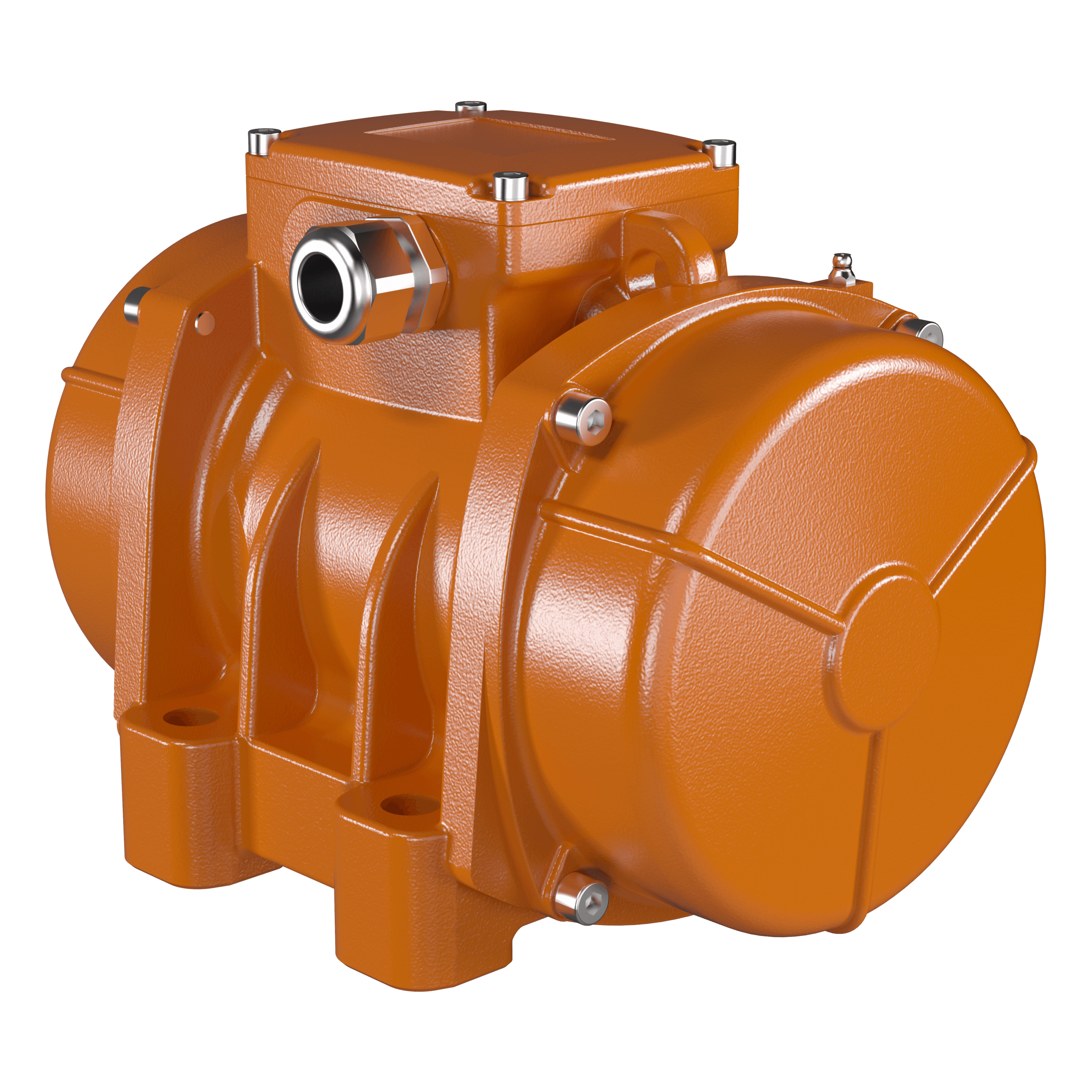 High frequency6,000 to 9,000 vibrations/min, for precast concrete2 series — 19 references — fixed or variable frequencyView the families →
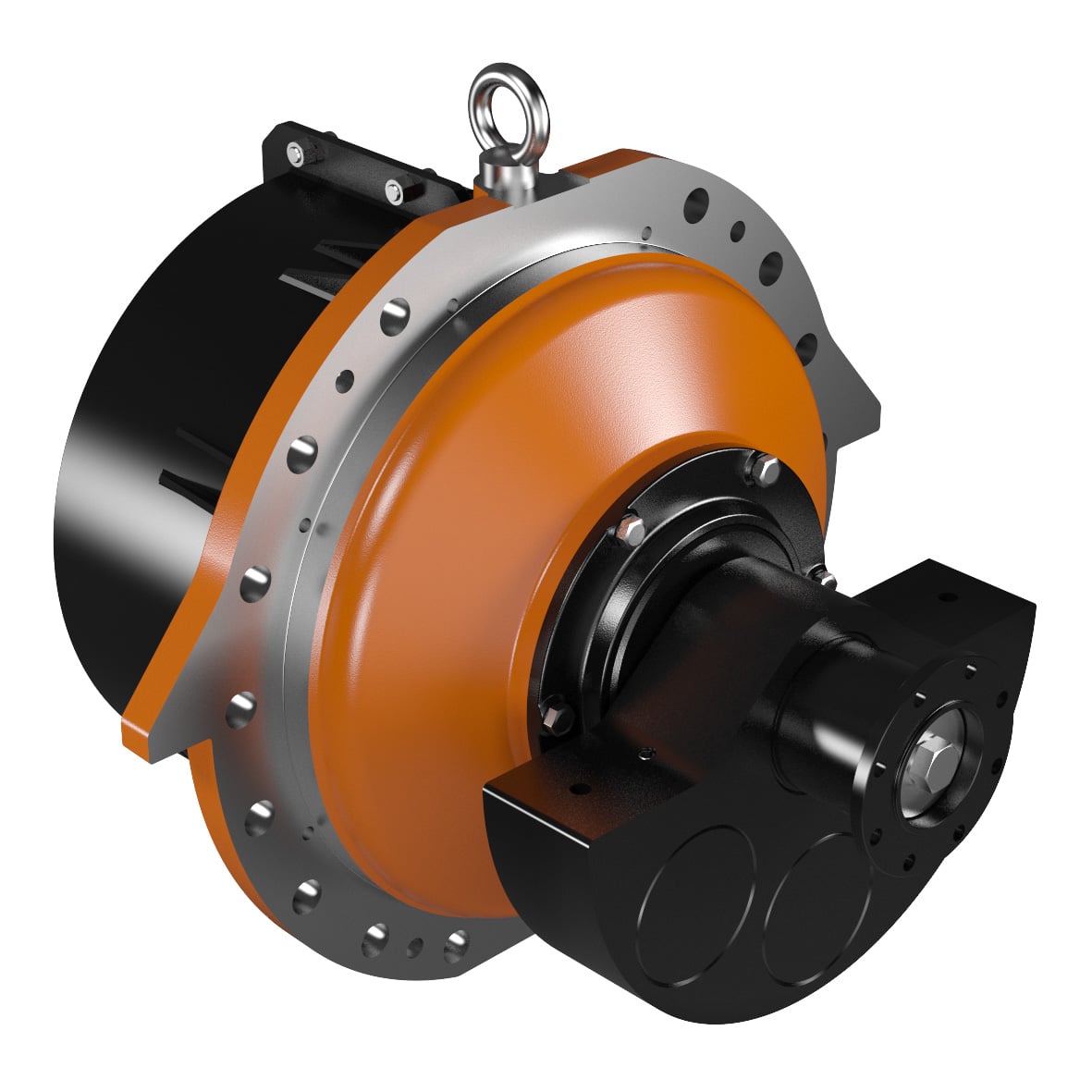 Mechanical vibratorsExciters without a motor, driven by an external motor2 series — 24 models — up to 718 kNView the families →